Email: tea.alagic@mac.com
Phone: 917 539 3928
Address:
1919 Madison Avenue, Apt 309 New York, NY 10025
Stateless Theater Company
The Filament Cycle
1999
Founder & Artistic Director: Tea Alagić
Based in: New York City
Performed by: Stateless at La MaMa ETC NYC
- Colorado spring Colorado College,
- Philadelphia Fringe Festival,
- Theatre Double Philadelphia,
- 4+4 Days in Movement, Prague Czech Republic,
- The Interart Annex NYC,
- Unidram Berlin Germany
World Premiere: La MaMa Experimental Theatre Club, New York (1999)
International Presentations:
- Battersea Arts Centre (BAC), London
- 4+4 Days in Motion Festival, Prague
- Unidram Festival, Potsdam
- Philadelphia Fringe Festival
Featuring:
Tea Alagic as Ivana
with Thaddeus Phillips, Steve Cuiffo
About the play:
The Filament Cycle represents a new performance style emerging from the rubble of the last century and the sleekness of the new one. The performance crosses gracefully and logically the boundaries between theater, film, and installation.
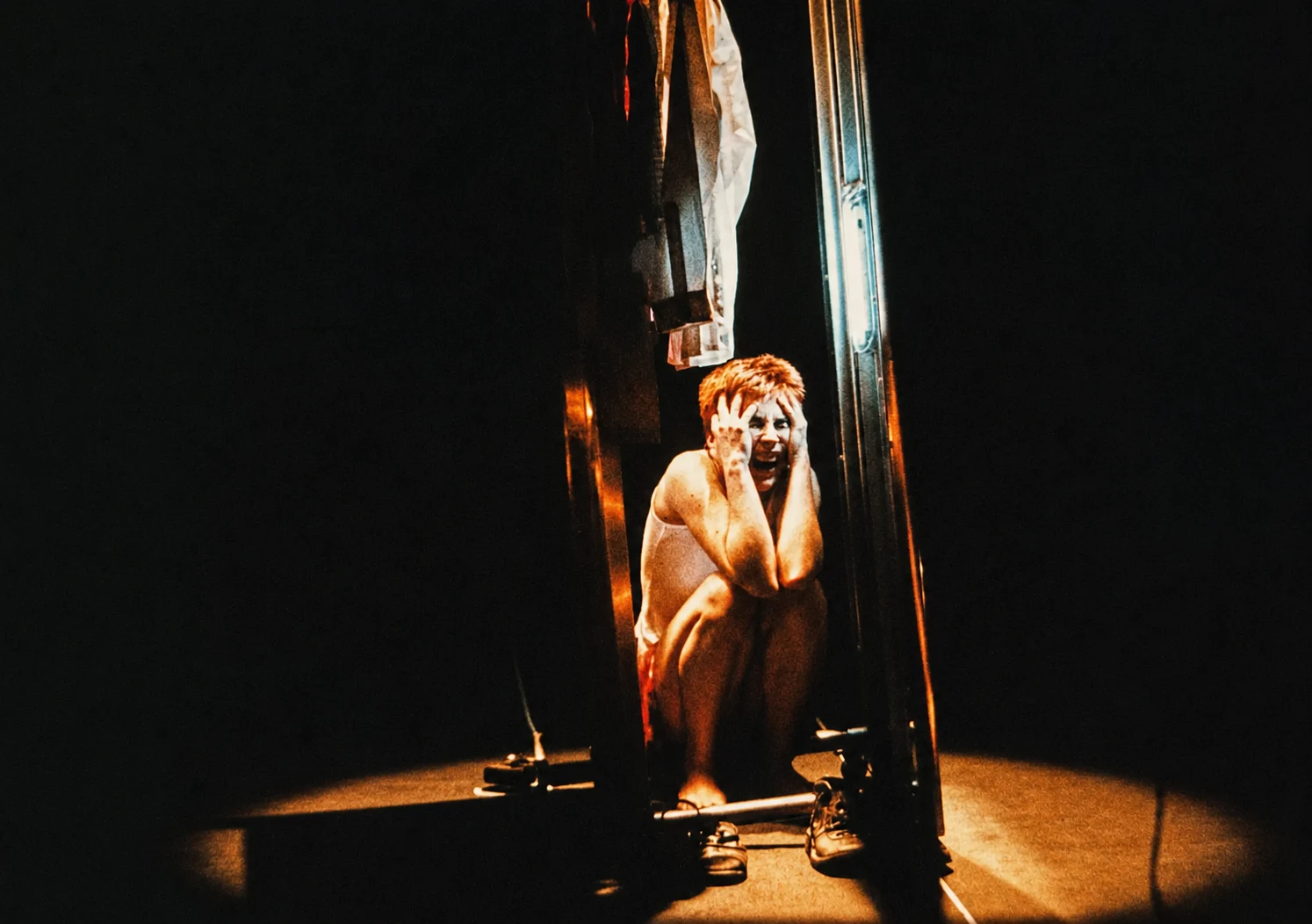
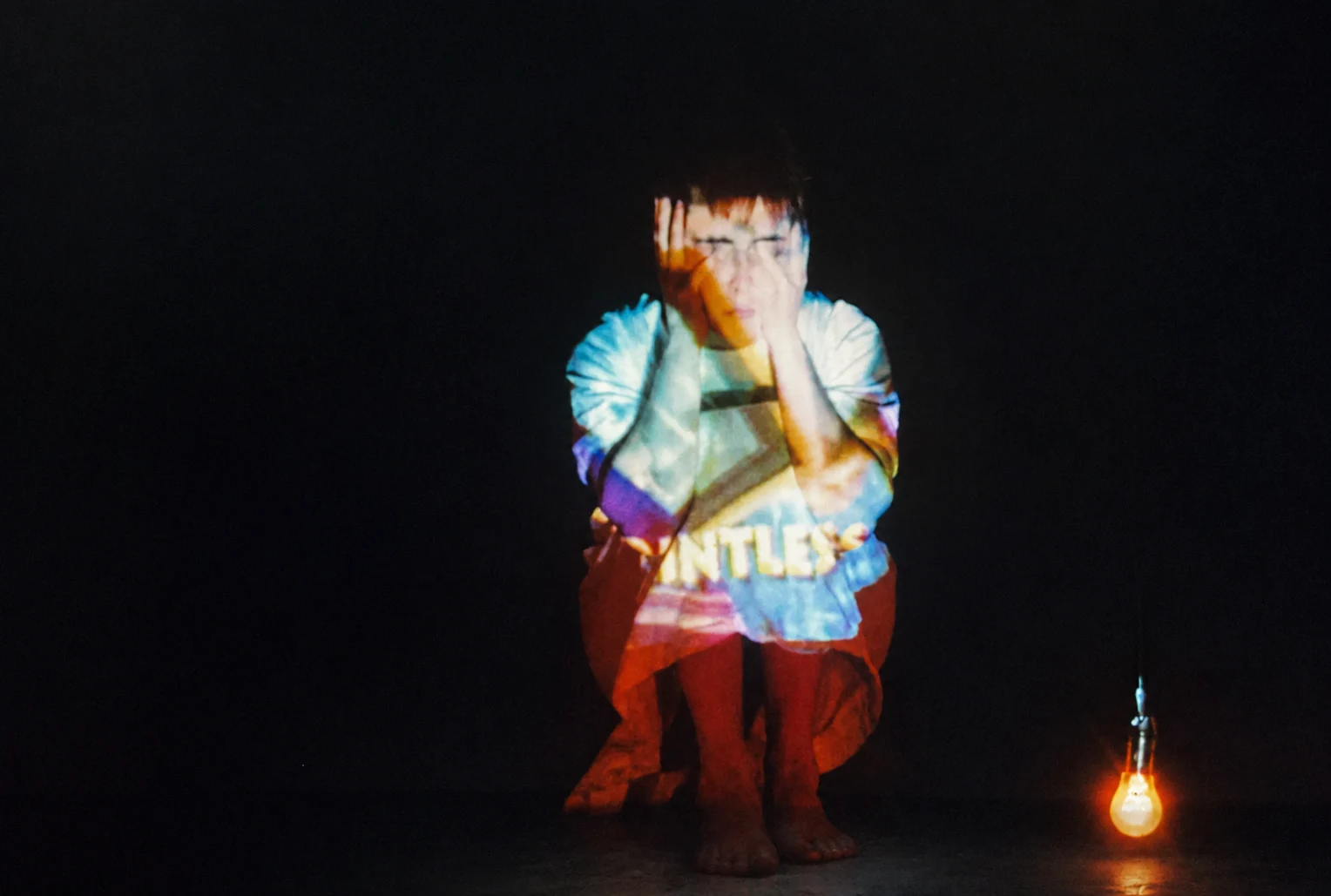
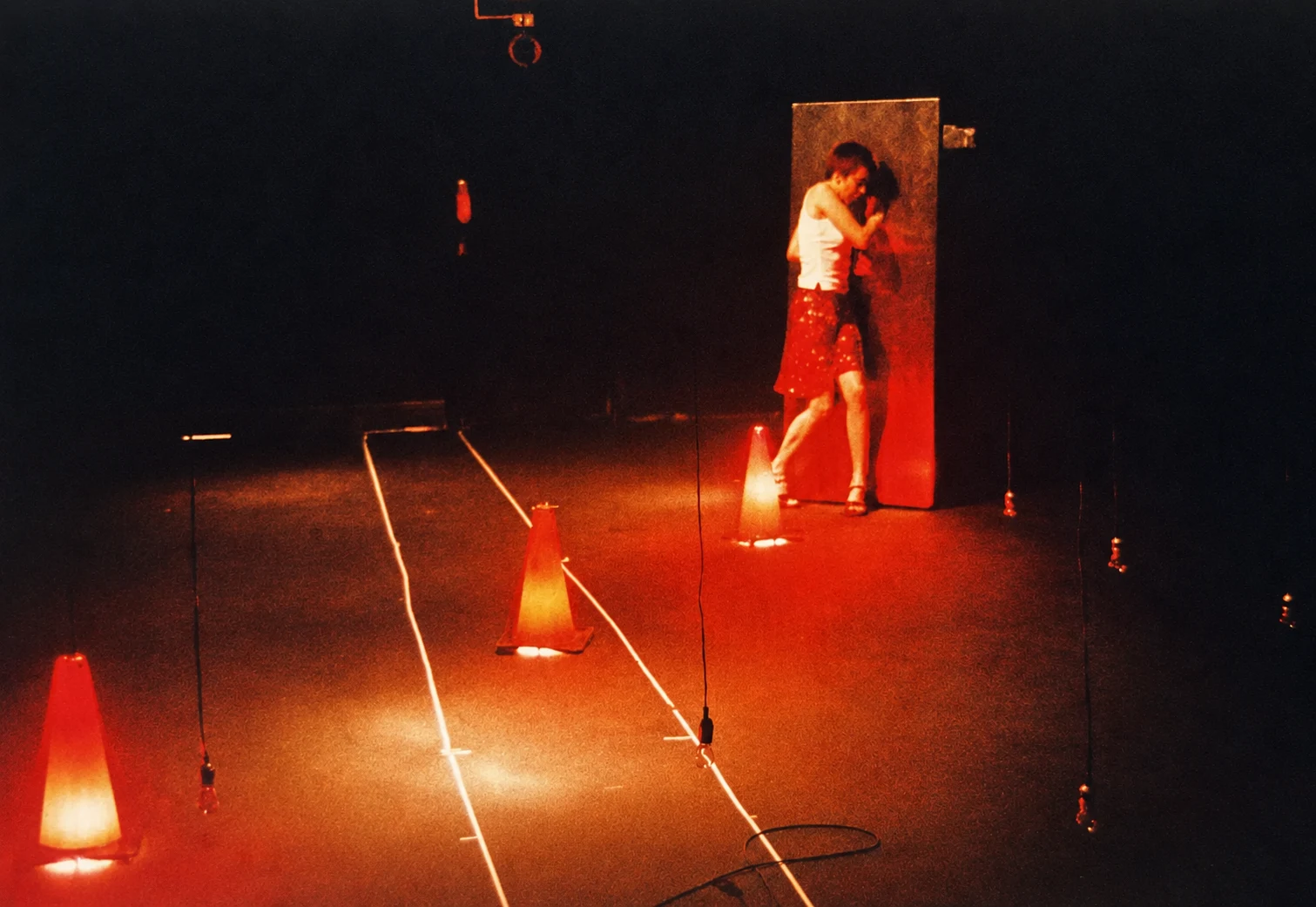
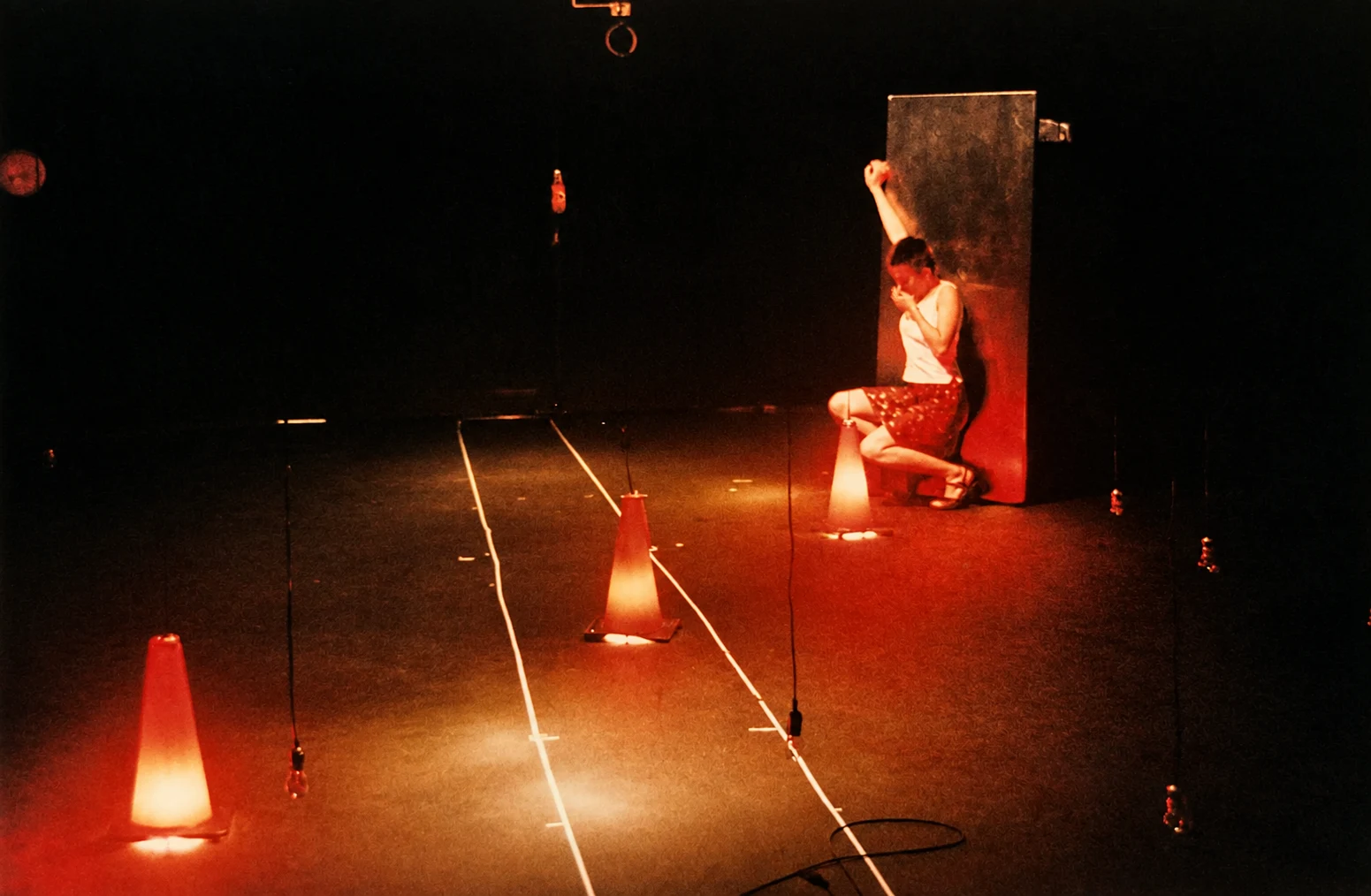
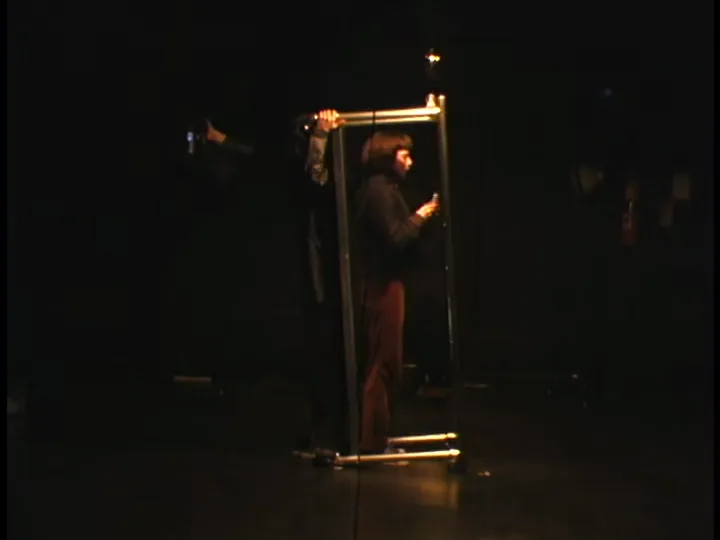
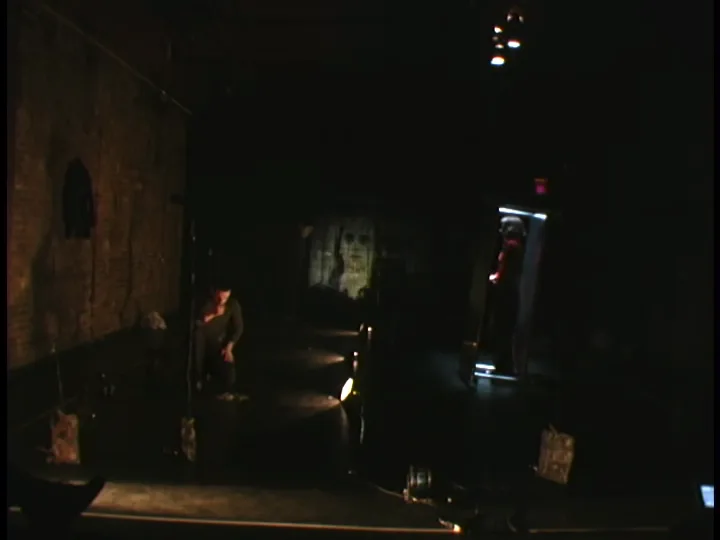
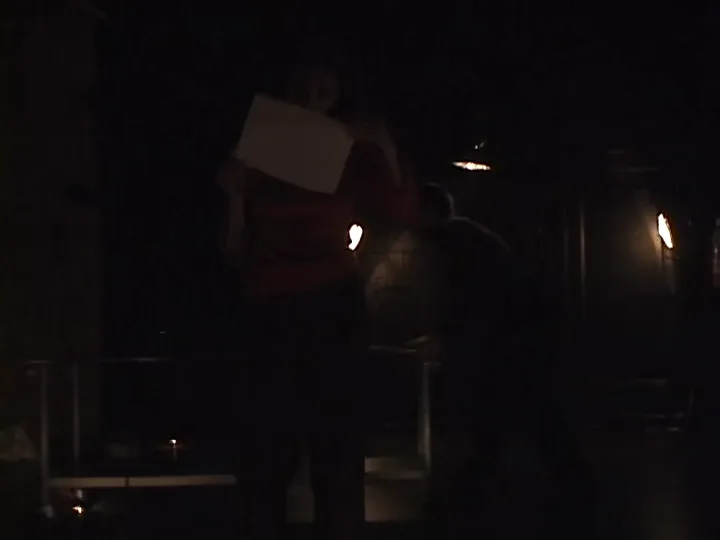
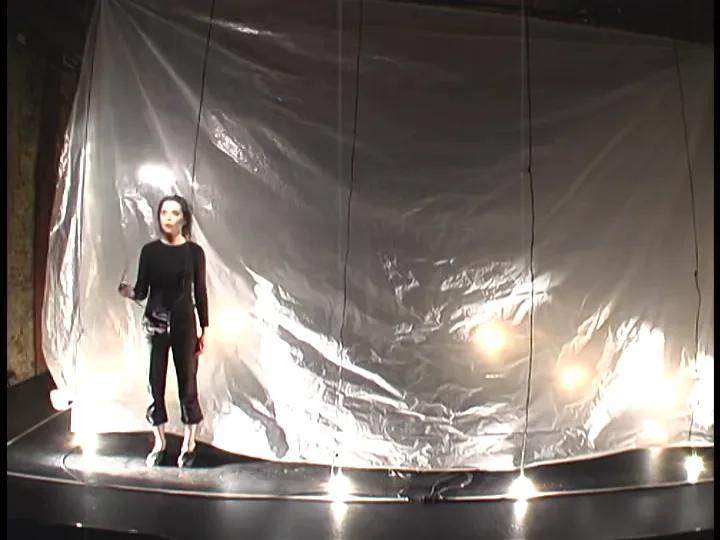
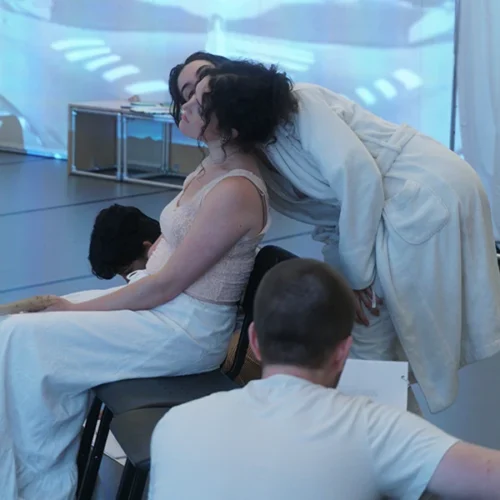
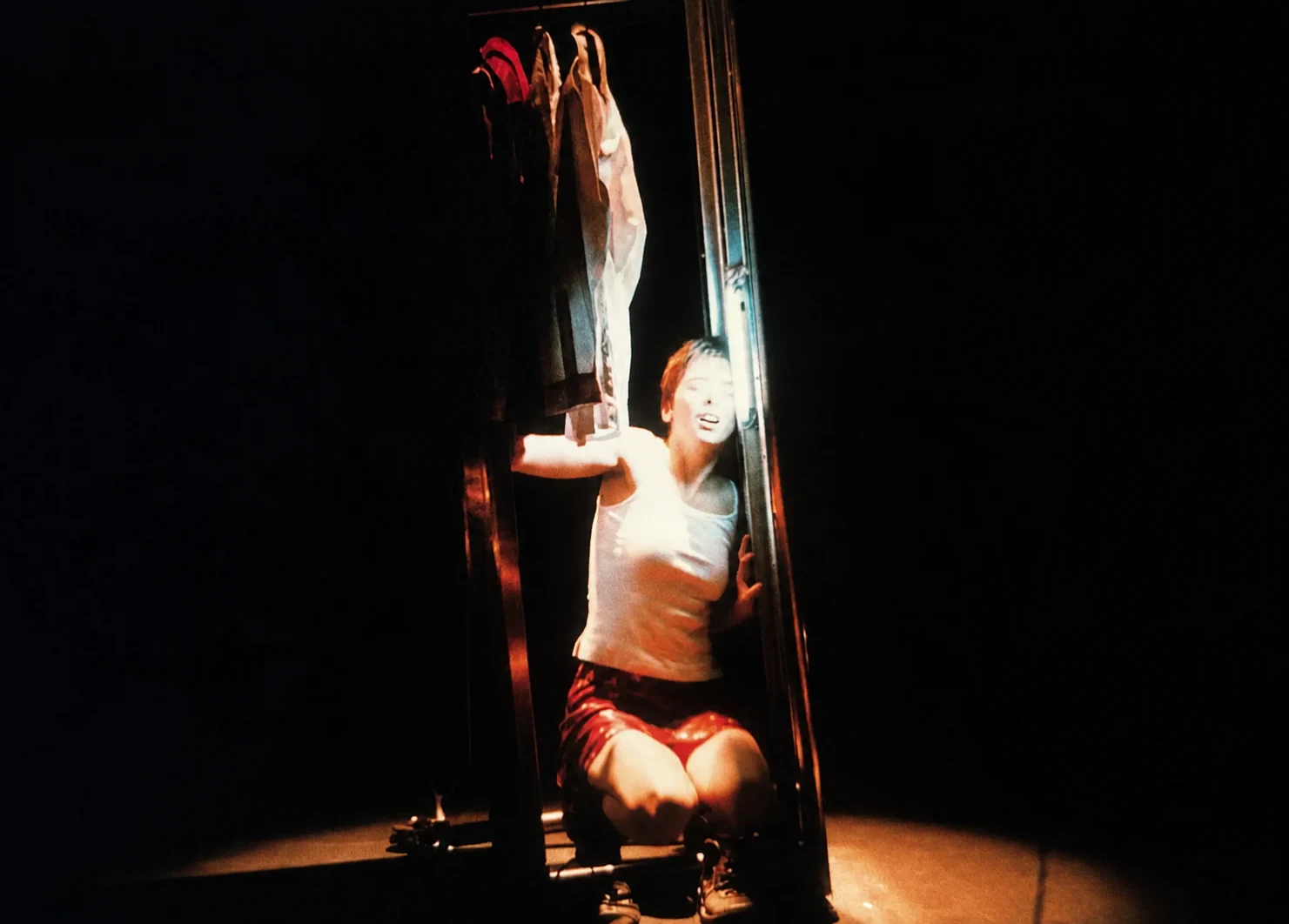
Created from autobiographical material, the piece includes images of war in Bosnia and Herzegovina, cable TV, light bulbs, neon lights, plastic sheeting, video cameras, and a steel table. Within the design are 15 light bulbs floating above the floor and a semi-opaque plastic box. Recorded and live video feeds are incorporated and projected on multiple surfaces with a ghost like, cinematic tone, which strongly resonates with the media environment in which we live. It speaks of the disassociation between the world we see on TV and the real one.
It is the story of a young Bosnian woman who arrives in New York after surviving the war and losing her family. She searches for her lost brother while trying to adapt to American life and culture, but she never succeeds.
Stateless Theatre Company was an experimental theater company founded by Tea Alagić in 1998. Dedicated to creating original devised work, the company brought together artists from different cultural backgrounds to develop interdisciplinary performances using new media, physical theater, visual storytelling, puppetry, and original music.
Rejecting fixed notions of nationhood, borders, and identity, Stateless explored migration, memory, and belonging through collaborative creation.
Under Tea Alagić’s artistic direction, the company developed an original body of work that toured internationally, establishing her early reputation as a director of devised and multimedia theater.
TEA ALAGIĆ STUDIO
REVIEWS / PRESS
Phone Moi
The Filament Cycle brilliantly explores human communication and connection in the global village.
By J. Cooper Robb
Exclamatory criticism often reaches hyperbolic levels with such catchphrases as “A Must-See!” and “Best of the Year!” Of course, these displays of critical passion tend to lose some of their impact through repeated use. So, without going overboard, let’s just say that the Stateless Theater Company’s production of The Filament Cycle is pretty damn good theater.
A wildly original production, The Filament Cycle is created and performed by Tea Alagic and Thaddeus Phillips from a text by Martin Baltscheit. Director Alagic utilizes still photos, live video, puppetry and movement to paradoxically show us characters strangely distant from themselves in an ever-shrinking world where nations are nothing more than airport destinations and anyone is just a phone call or email away.
The multimedia play concerns a filmmaker by the name of Ed. Ed doesn’t consider himself an artist, for, as he is fond of saying, “The things I make are about other people.” One of these “other people” is Ivana, a Bosnian refugee he meets while waiting for the subway. They share a drink and chat back at his place before Ivana disappears, leaving Ed to wonder just who this mysterious woman is.
When Ed starts pondering Ivana’s past, present and future, he thinks about his own, etc. Both characters have fragmentary pasts, but that’s where the similarity ends. Ed’s memories are faded snapshots of childhood parties and birthday cakes, while Ivana’s past contains brutality and rape in a concentration camp. The point here seems to be that while the world is small enough to offer a chance meeting on a subway platform, there is still a profound and often frightening disparity in the human experience.
The characters negotiate their way through hanging lightbulbs, traffic cones and a table that magically transforms into a bar, phone booth, shower and closet. To that end, the production features brilliant lighting, sound and choreography.
Along the way, we see Ivana phoning the relatives of missing persons to report them found, a recurring theme in this twilight zone where people seem to disappear, detach and disassociate with alarming regularity.
None of this is performed in anything resembling a linear, cause-and-effect structure. And while The Filament Cycle is often inscrutable, it is also never less than completely engrossing. Bold in its vision and extraordinarily polished in its presentation, the production seems to be saying that all lines of communication are open. Someone just has to pick up the phone.